ILayer
Graphic Novel
A Day at the Dionysia
Follow Kleon, an Athenian potter, through dawn libations, the procession of Dionysus, and a single performance of Sophocles' Oedipus Tyrannus that he will remember for the rest of his life.
Enter →
Διονύσια τὰ ἐν ἄστει
For five days each spring, the Athenian democracy stopped governing and started watching. Fifteen thousand citizens climbed the south slope of the Acropolis to weep, to laugh, and—if Aristotle is right—to be purged. They were inventing something the world had never seen.
Story, reference, argument. Each layer is complete on its own. Together they reconstruct the strangest civic ritual the West ever invented.
Follow Kleon, an Athenian potter, through dawn libations, the procession of Dionysus, and a single performance of Sophocles' Oedipus Tyrannus that he will remember for the rest of his life.
Theatre architecture, Aristotle's Poetics, tragedy, comedy, satyr plays, the chorus, masks, the festival itself, the relationship between drama and the Athenian assembly.
An argument: tragedy was not entertainment but infrastructure. A reading of catharsis, fate, and collective storytelling that runs from Aeschylus to Succession, The Last of Us, and the contemporary feed.
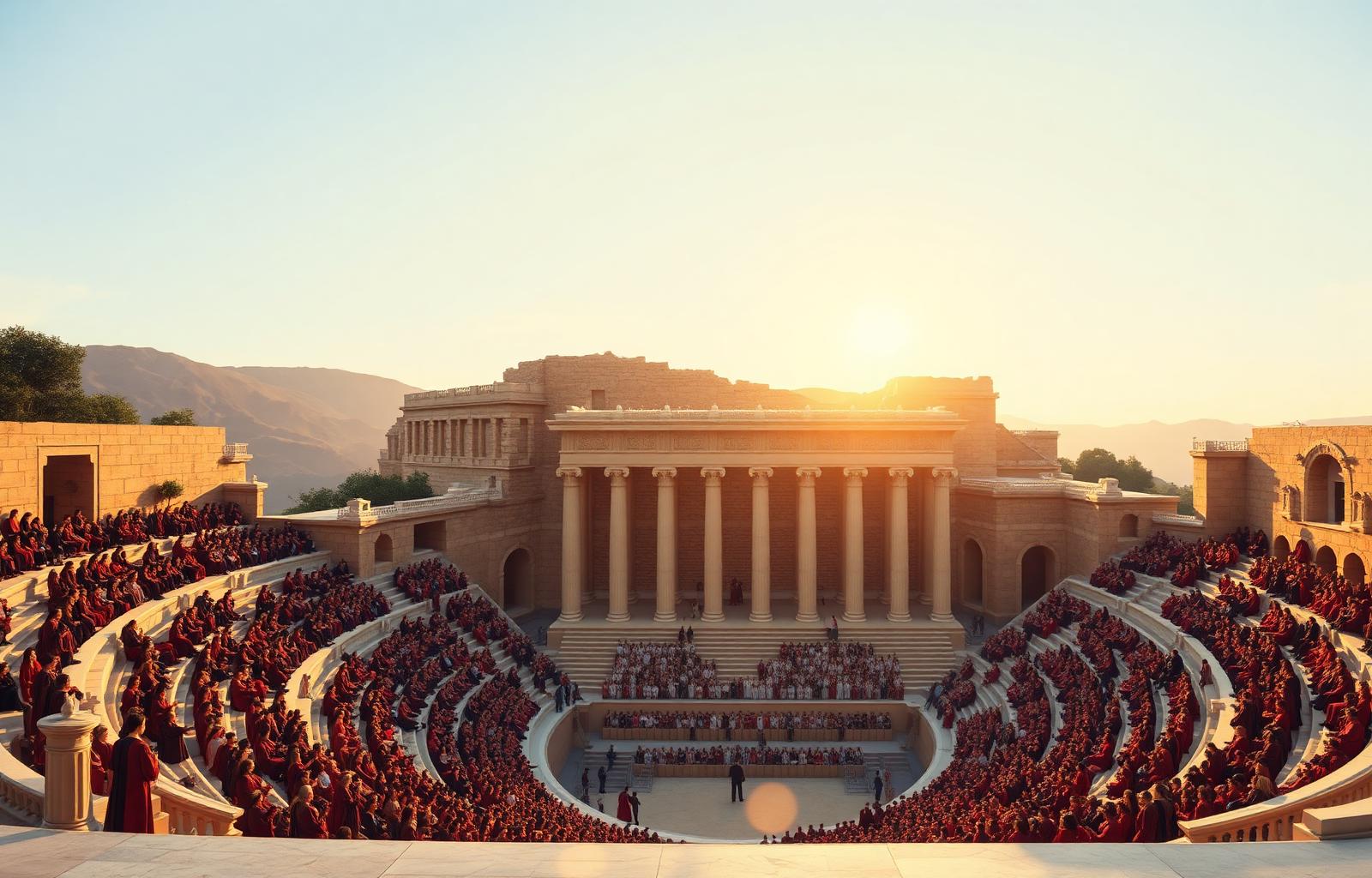
The Greek theatre is a precision instrument. A circular dancing-floor for the chorus. A long stage building for the actors. A hillside carved into seventy-eight tiers of stone. Acoustics so exact a coin dropped in the orchestra can be heard in the last row. Every choice serves a single purpose: to let fifteen thousand strangers feel one thing, together, at the same moment.
Study the architecture →The City Dionysia presented all three in deliberate sequence. The order was not aesthetic — it was civic medicine.
Heroic suffering. Fate and the gods. Public lamentation as civic ritual.
Political satire, the absurd, the obscene. Aristophanes mocks generals by name.
Chorus of drunken satyrs. The comic relief after a tragic trilogy.
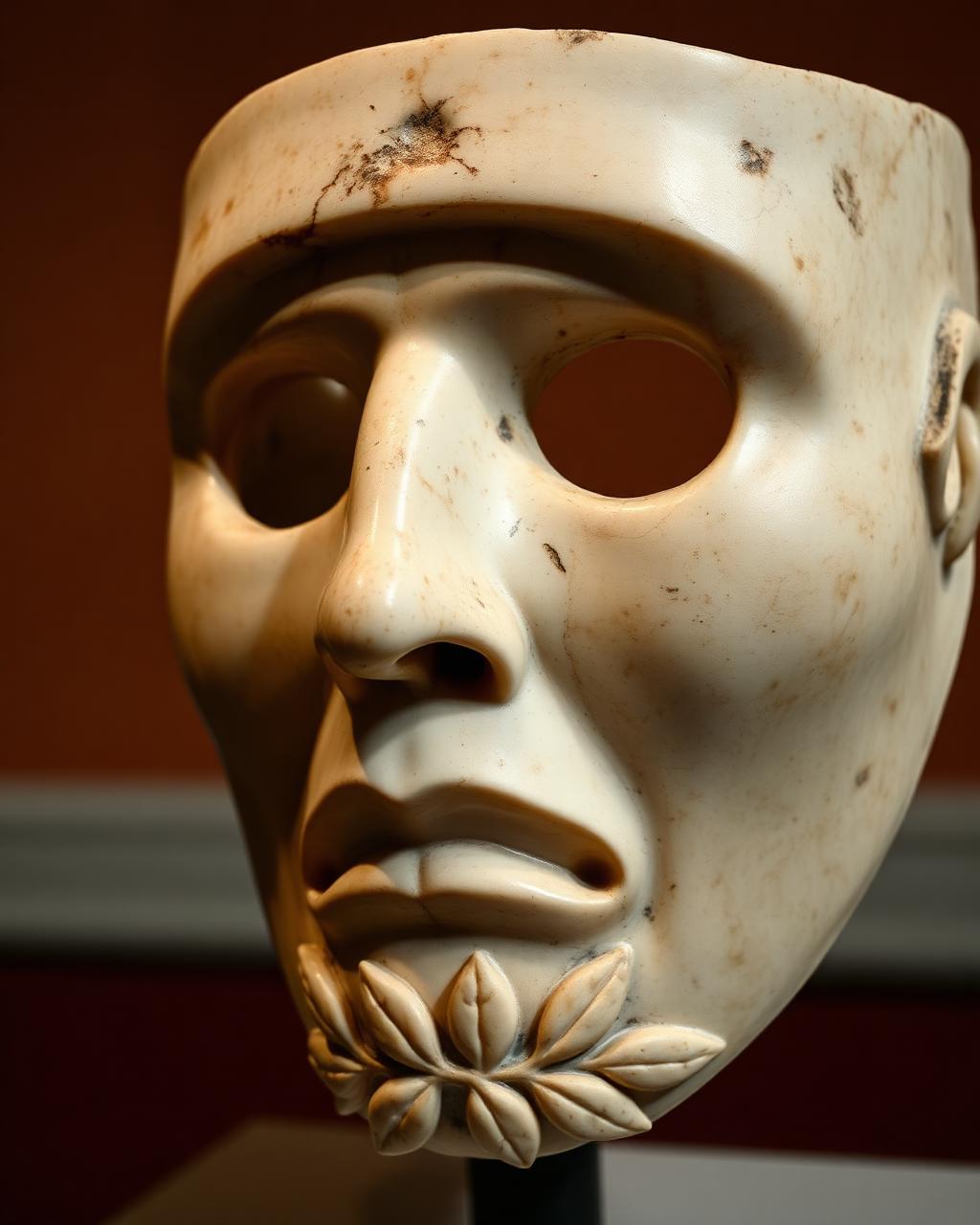
"Tragedy, then, is an imitation of an action that is serious, complete, and of a certain magnitude … effecting through pity and fear the catharsis of such emotions."
The word catharsis in Aristotle's Greek is medical — the same term a physician used for draining bile. Tragedy, for him, is not a poem to be admired but a procedure to be undergone. The audience leaves the theatre lighter than it entered.