τραγῳδία
Tragedy
Heroic suffering. Fate and the gods. Public lamentation as civic ritual.
Three competing playwrights, three plays each.
τὸ ἀρχαῖον δρᾶμα
An encyclopaedic walkthrough of the festival, its architecture, its three genres, its philosopher, and its complicated entanglement with Athenian democracy.
The City Dionysia (or "Great Dionysia") was a five-day spring festival held in Athens in honour of the god Dionysus. Established in the 6th century BCE under the tyrant Peisistratos, it grew into the centrepiece of the Athenian civic calendar and the most important dramatic festival in the Greek world.
The format was a state-run competition. Three tragedians were selected by the archon and each given a chorus of fifteen, three actors, and a wealthy chorēgos who paid the bills. Each presented three tragedies and one satyr play. Five comedies competed separately. A panel of ten citizens, chosen by lot, declared the winners.
Attendance was a civic act. Tickets were two obols — and from the time of Pericles the state paid them, so no Athenian was kept away by poverty. The audience included men, war orphans of the state, foreign ambassadors, allied tribute-bearers, and — depending on which scholar you believe — women.
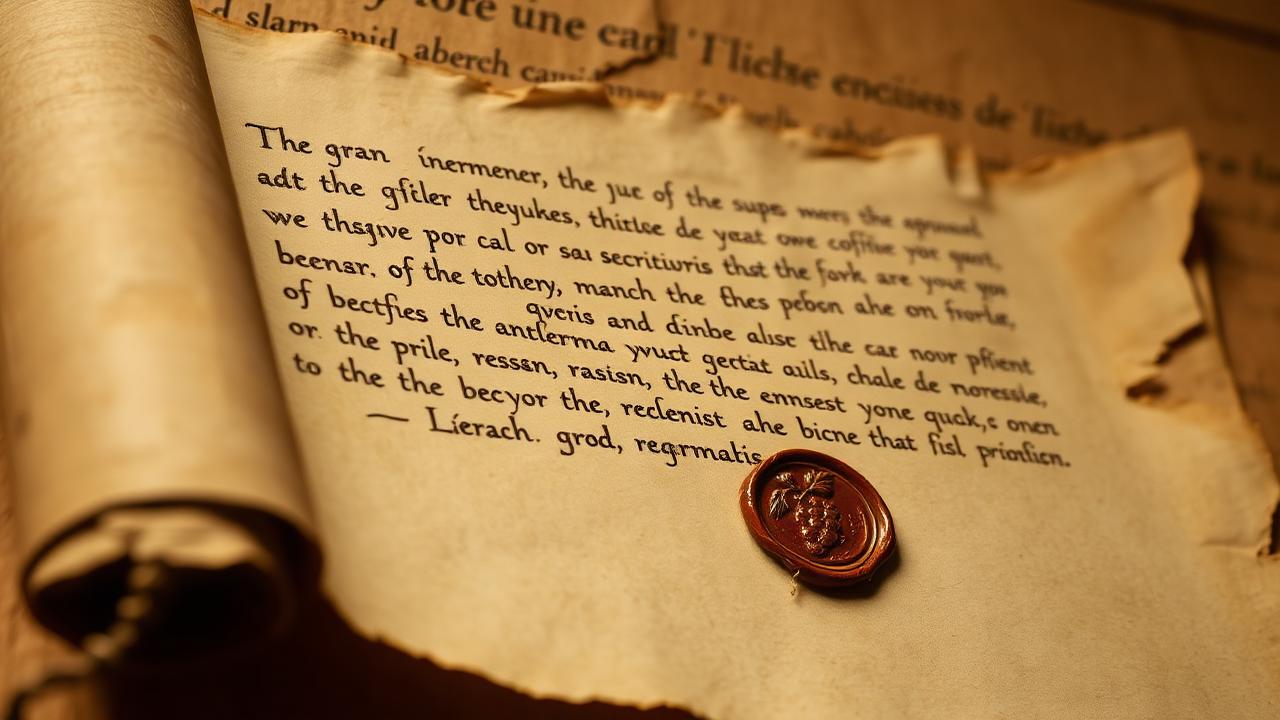
Papyrus fragment, illustrative reconstruction.
The Greek theatre is built into a hillside, never on flat ground. Its parts are few and exact: the theatron (viewing place — the curving stone seating); the orchestra (the circular dancing-floor for the chorus, with the altar of Dionysus at its centre); the skene (the long building behind the orchestra, which doubles as backdrop, dressing-room, and painted scenery); and the two parodoi — the side passages by which the chorus enters.
The earliest theatres were temporary wooden structures in the Agora. After the collapse of one such bleacher around 499 BCE — the Athenians, characteristically, abandoned the site as cursed — the city moved performances to the south slope of the Acropolis, where the stone Theatre of Dionysus stands today.
Written around 335 BCE — a century after the great age of tragedy was over — Aristotle's Poetics is the West's first work of literary criticism. It is short, dry, and at times almost a checklist. It is also the document that gave us the words plot, character, spectacle, and — most fatefully — catharsis.
Aristotle's argument, compressed: tragedy is an imitation (mimesis) of a serious action; it works by inducing in the audience the emotions of pity and fear; and through their controlled release the audience is purged — katharsis. The structural core of a tragic plot is the peripeteia (reversal) coupled with the anagnorisis (recognition): a moment in which what the hero knows changes and his fortune inverts.
The word tragōidia means, literally, "goat-song" — the original chorus may have worn goat-skins, or the prize for the best play may have been a goat. The genre's history is conventionally divided into three names.
If tragedy is the mood of fate, comedy is the mood of the agora. Athenian Old Comedy — chiefly the eleven surviving plays of Aristophanes — is political, obscene, fantastical, and remarkably specific. Generals are named; philosophers are caricatured; the city's own war strategy is satirised within blocks of the Assembly that voted for it.
The comic chorus often wore animal costumes (wasps, birds, frogs, clouds). The plot regularly turned on an absurd idea: a woman organising an Athenian sex strike to end the war (Lysistrata); a man flying to heaven on a dung-beetle (Peace). After the loss of the empire and the rise of Macedon, the political teeth of comedy were pulled — Middle and New Comedy turned domestic. Menander's lovers and mistaken identities are the ancestors of every sitcom plot since.
A satyr play followed each tragic trilogy — a short, riotous piece in which a chorus of satyrs (drunken, lecherous goat-men attendant on Dionysus) is dragged into a story from the same mythic cycle as the tragedies. Only one survives whole: Euripides' Cyclops. The satyr play seems to have functioned as a deliberate decompression: after watching a king blind himself, you watched his half-divine half-brother chased around the stage by goat-men. The festival programme was a curated emotional arc.
Heroic suffering. Fate and the gods. Public lamentation as civic ritual.
Political satire, the absurd, the obscene. Aristophanes mocks generals by name.
Chorus of drunken satyrs. The comic relief after a tragic trilogy.
The chorus is the single feature most foreign to a modern audience and most central to Greek tragedy. Fifteen citizens in unison: dancing in the orchestra, singing in metres invented for the occasion, speaking sometimes as the playwright's voice, sometimes as the city's, sometimes as a single trembling character.
The chorus is what makes Greek theatre collective. The protagonist may suffer alone, but the chorus stands at the edge of his suffering and tells the city what it means. Without the chorus, tragedy would be a private grief. With it, tragedy is a public ritual.
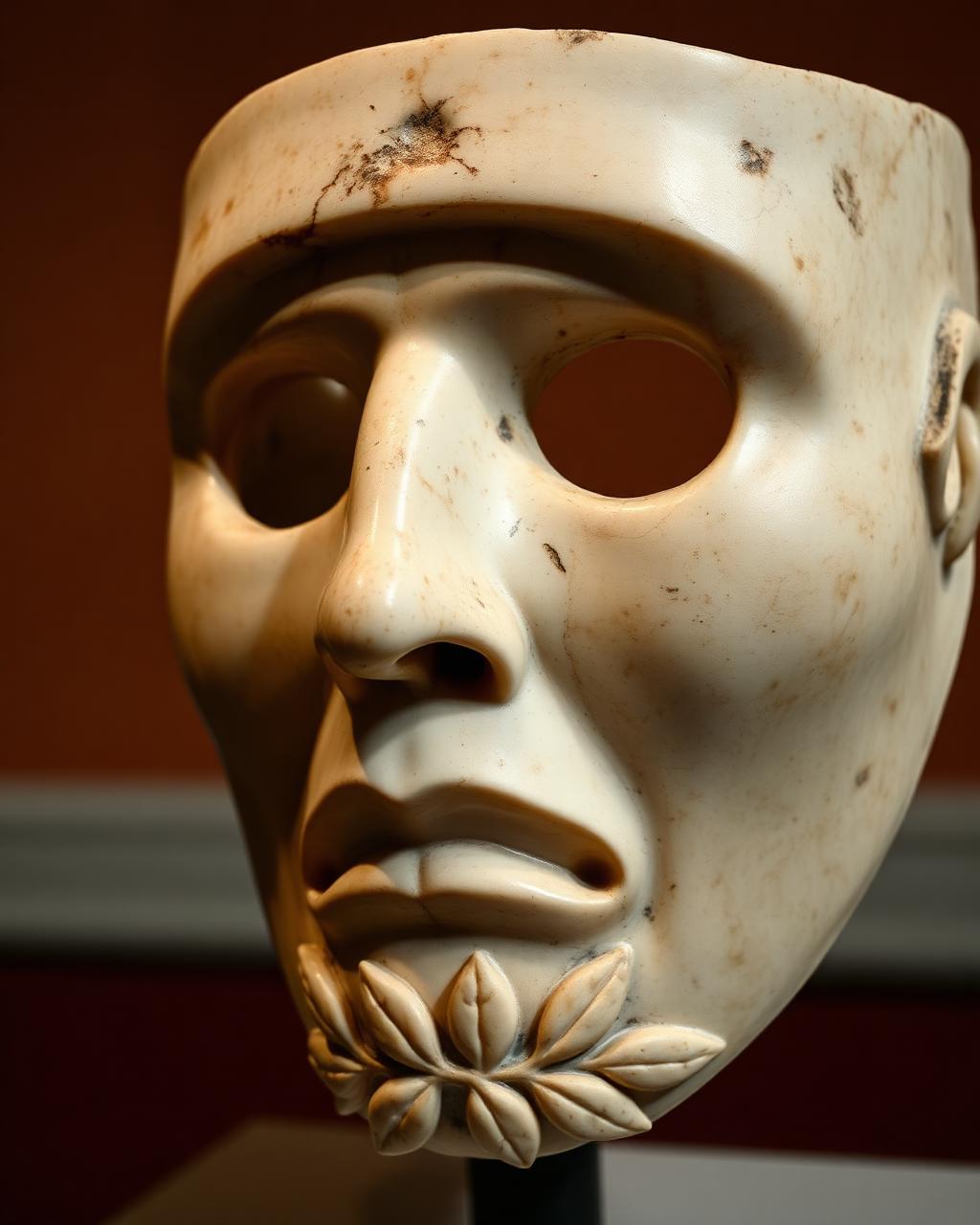
Every Greek actor wore a mask — prosōpon, the same word the Greeks used for "person." Masks were made of linen or cork, painted, and topped with a wig. They projected the voice in the open-air theatre, made roles visible to spectators sixty metres away, and — crucially — allowed three actors to play every character in the play, men playing women, kings, gods, and ghosts in turn.
Costume signalled status the way a modern uniform does: kings wore long sleeves and the kothurnoi (high-soled boots); choruses wore matching robes; satyrs wore short tunics and grotesque phalluses. Nothing on stage was naturalistic. Everything was readable.
Athenian tragedy and Athenian democracy were born in the same generation. The reforms of Cleisthenes (508 BCE) and the first tragic victory of Aeschylus (484 BCE) are separated by a single human lifetime. The two institutions shared a building stock, a citizen body, and a way of doing business.
An Athenian male citizen could, in a single year, vote in the Assembly on the Pnyx, sit on a jury in the Agora, march in the army at Marathon, and stand in the chorus of a tragedy at the Theatre of Dionysus. The theatre was not an entertainment that occasionally referred to civic life. It was civic life, in a different mode.
Plays staged the city's hardest cases — the limits of obedience to the state (Antigone), the morality of vengeance (The Oresteia), the cost of empire (The Trojan Women) — in front of the same men who would decide them by show of hands the following week.
Three civic spaces, walking distance apart, defined the Athenian week: the Pnyx, where citizens voted; the Agora, where they argued and tried each other; and the Theatre of Dionysus, where they wept.
The first 'actor' — Thespis — wins the inaugural tragic prize at the City Dionysia, stepping out of the chorus to play a single character. The word 'thespian' descends from his name.
Cleisthenes' reforms inaugurate Athenian democracy. The deme system that organises the chorus is the same one that organises the army and the vote.
The oldest surviving Greek play — and the only surviving tragedy on a contemporary historical event, the defeat of Xerxes at Salamis eight years earlier.
Aeschylus' trilogy ends with Athena founding the Areopagus, Athens' first homicide court. Theatre dramatises the city's own legal institutions.
Sophocles' play on conscience versus the state. Tradition holds the Athenians were so impressed they elected him general.
Performed during the plague that killed Pericles. A play about a city whose ruler cannot see the cause of its suffering.
Aristophanes stages a women's sex strike to end the Peloponnesian War. The play is performed two years after the disastrous Sicilian Expedition.
A generation after the great tragedians are dead, Aristotle writes the West's first work of literary theory.
Sulla sacks Athens. The Theatre of Dionysus survives. The festival continues, in diminished form, into the Roman period.